November 11, 2026
How to Match a Car Hauler to the Vehicle You Actually Haul
By @rollingloads
Start With the Gross Vehicle Weight Rating
The first step in choosing a car hauler is understanding the weight of the vehicle or vehicles you plan to carry. Every trailer has a gross vehicle weight rating (GVWR) that tells you the maximum loaded weight it can handle. That number includes the weight of the trailer itself plus the cargo. If you are hauling a single sedan, a lighter trailer will do. If you plan to move a heavy pickup, a loaded work van, or multiple vehicles at once, you need a trailer with a GVWR well above the combined weight of your load.
A common mistake is to buy a trailer that just barely matches the vehicle weight. You want a safety margin, usually 20 to 30 percent above the actual load. That extra capacity accounts for gear, tools, or any cargo you might add later. It also reduces wear on the frame, axles, and tires over time. Check the manufacturer's tag on the trailer frame for the GVWR, and compare it to the vehicle's gross vehicle weight listed in its owner manual or on the door jamb sticker.
Consider the Trailer Deck and Loading Style
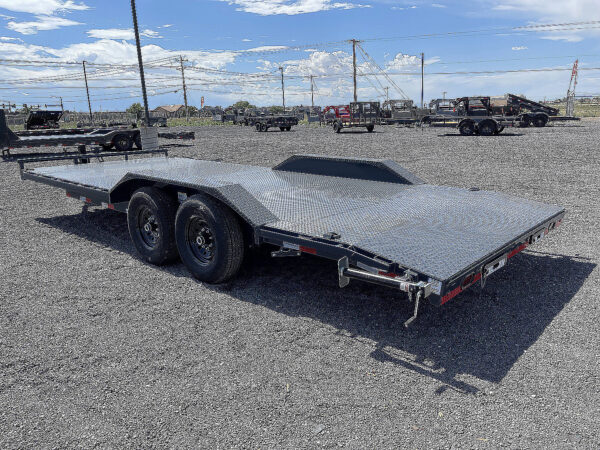
The deck of a car hauler determines how easy it is to load and secure a vehicle. There are two main designs: a straight deck and a drop deck. A straight deck keeps the same height from front to rear, which works for most passenger cars and light trucks. A drop deck, sometimes called a step deck, lowers the center section of the deck so taller vehicles like vans or SUVs fit under overhead clearance restrictions. If you regularly haul a vehicle with a high roofline, a drop deck can save you from worrying about bridge height limits.
Also consider whether the deck is a full deckover design. Deckover trailers have no wheel wells protruding into the deck surface, giving you a completely flat loading area. That makes it easier to push a vehicle on without catching a tire in a recessed well. If you ever plan to haul a wide vehicle or one with an unusual wheelbase, a flat deck simplifies positioning and strapping.
Check the Loading Ramps and Hydraulic Lift Options
Getting the vehicle onto the trailer is where many people run into trouble. Most car haulers come with a pair of loading ramps that stow under the deck or on the side. Look at the ramp weight rating and length. Longer ramps create a shallower angle, which is critical for low-clearance vehicles like sports cars or modified trucks. A steep ramp angle can scrape the undercarriage or damage the front bumper on loading.
For heavier vehicles or frequent loading, a hydraulic lift gate at the rear of the trailer is a practical upgrade. A hydraulic lift raises and lowers the vehicle from ground level to deck height without driving up a ramp. That eliminates ramp angle issues altogether and reduces the risk of a loading accident. Some trailers also include a tilt deck feature that pivots the entire bed to ground level, which is another option for low-clearance loads.
Examine the Tie-Down Points and Wheel Wells
Once the vehicle is on the deck, you need to secure it properly. Look for multiple tie-down points along the frame rails and at the front and rear of the trailer. A good car hauler has at least four to six D-rings or stake pockets rated for the load you plan to carry. The tie-downs should be welded or bolted to the main frame, not just attached to the decking material. Use straps rated for the vehicle weight and run them over the axle or through the wheels, never over the body panels.
Wheel wells are another detail to inspect. Some car haulers have raised wheel wells that create a hump on the deck surface. If the vehicle you haul has a narrow track width, the tires might straddle the wells or hit them. Measure the distance between the wheel wells and compare it to your vehicle's track width. If you have a wide vehicle, consider a trailer with no wheel wells or with adjustable wells that you can move to match the load.
Factor in the Trailer's Own Weight and Towing Requirements
A car hauler itself weighs a significant amount, typically between 1,500 and 3,500 pounds depending on size and construction. That weight counts toward the GVWR and also toward your tow vehicle's capacity. Check your tow vehicle's maximum tow rating, which you can find in the owner's manual or on a sticker inside the driver door. Subtract the trailer's empty weight from that rating to see how much payload you can actually carry. If the trailer weighs 2,500 pounds empty and your tow vehicle is rated for 7,000 pounds, you can haul a vehicle up to about 4,500 pounds.
Also consider the hitch type. A bumper-pull car hauler uses a standard ball hitch and is common for lighter loads. A gooseneck or fifth-wheel trailer distributes weight over the tow vehicle's drive axles and handles heavier loads more safely. If you plan to haul a heavy truck or multiple vehicles, a gooseneck design is worth the extra cost. It also provides more stability at highway speeds.
Look at the Sidewalls and Rear Door Configuration
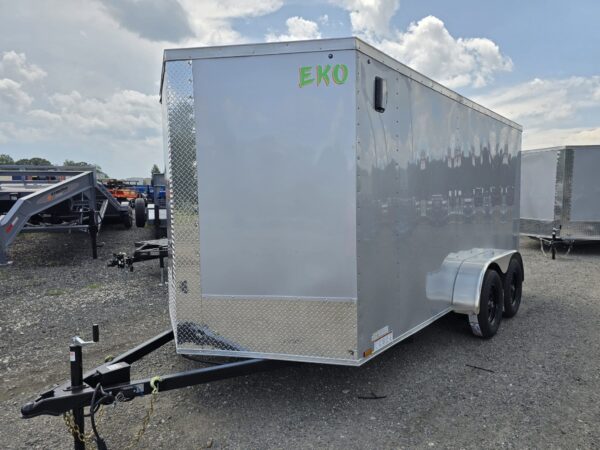
Some car haulers come with sidewalls and a rear door, effectively turning the trailer into an enclosed trailer. That can protect the vehicle from weather, road debris, and theft. If you are hauling a classic car, a restored project, or any vehicle you want to keep clean, enclosed sidewalls are a smart choice. The rear door can be a ramp door that folds down as a loading ramp or a separate door with external ramps. A ramp door is convenient because it serves double duty, but it can be heavy to lift on larger trailers.
If you choose an enclosed trailer, check the interior height. Some enclosed car haulers have a low roofline that works for cars but not for taller vans. Measure the vehicle height and add at least six inches for clearance. Also look at the tie-down points inside an enclosed trailer. They should be recessed or flush to avoid snagging cargo. For open car haulers, sidewalls are usually low or absent, which makes loading and strapping easier but leaves the vehicle exposed.
Think About Future Uses and Versatility
A car hauler is an investment, so think beyond the immediate vehicle. If you might later need to haul a different type of vehicle, or if you want the trailer to double as a utility trailer for moving furniture, equipment, or building materials, choose a design that adapts. A flat-deck car hauler with removable side rails or stake pockets can serve both roles. A gooseneck trailer with a deckover design gives you the flexibility to carry cars, pallets, or even small machinery.
One way to get a feel for options is to visit a dealer that stocks multiple brands and configurations. For example, Elite Plus Trailers carries a range of car haulers and can help you compare features side by side. Seeing the deck height, ramp angle, and tie-down layout in person tells you more than any spec sheet. Elite Plus Trailers also offers used equipment, which can be a good way to get a higher-end trailer at a lower price if the vehicle you haul is within its capacity.
Before you buy, check the trailer's build quality. Look at the welds, the thickness of the frame tubing, and the quality of the axle and spring assemblies. A trailer that looks flimsy when empty will handle poorly when loaded. Pay attention to the tire rating and the spare tire mount. A flat tire in the middle of a trip is a hassle you can avoid by checking the tire load rating matches your heaviest load.
Summary of Key Checks
Choosing the right car hauler means balancing the vehicle weight, deck design, loading method, and tie-down system. Start with the weight ratings, then move to the physical layout of the deck and ramps. Consider whether enclosed sidewalls and a rear door add value for your use case. Finally, think about future needs so the trailer stays useful as your hauling demands change. A careful choice now saves you from upgrading later.
❧